Tsiolkovsky-1
NKUA's first student rocketry team designed, built, and static-fired a solid-propellant motor entirely in-house.
Founding the team
I founded DeltaV Dynamics in October 2023, the first experimental student rocketry team at the National & Kapodistrian University of Athens, to create the hands-on opportunities that didn't exist, and to establish a lasting student rocketry presence in Greece.
The first hard milestone: design, build, and demonstrate a real solid-propellant rocket motor, something only a handful of Greek universities have ever done.

Choosing safety over peak performance
We selected a potassium nitrate / sorbitol (KNO₃-sorbitol) propellant, a deliberate choice. Its high ignition temperature gives a large safety margin during cooking and casting, and it is far more handling-friendly than higher-energy alternatives, trading slightly lower performance for safe, repeatable manufacturing.
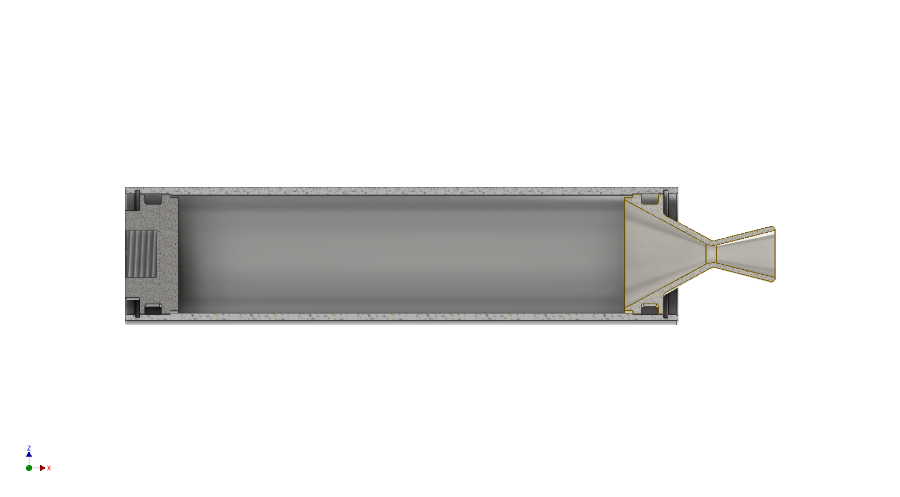
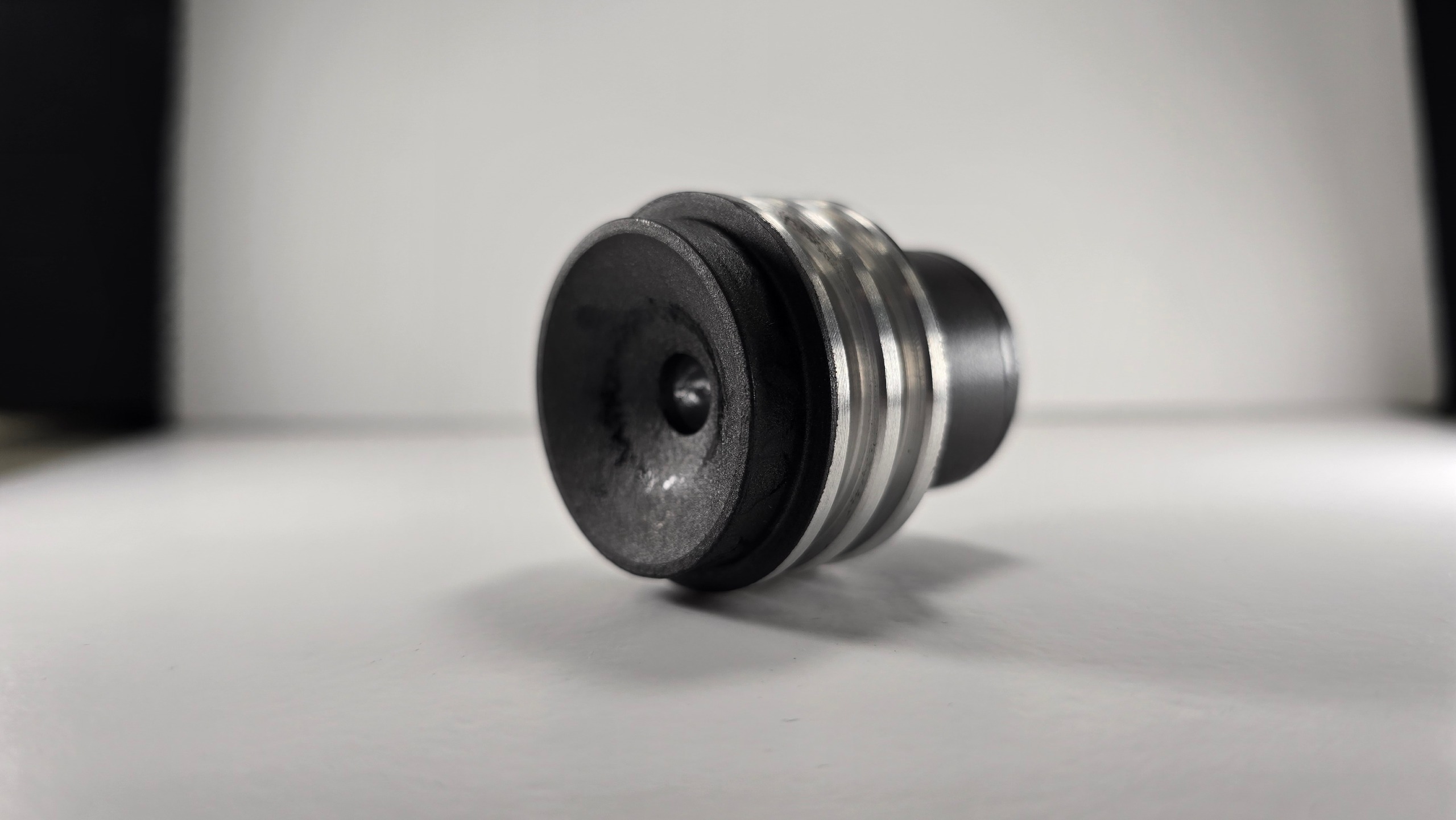
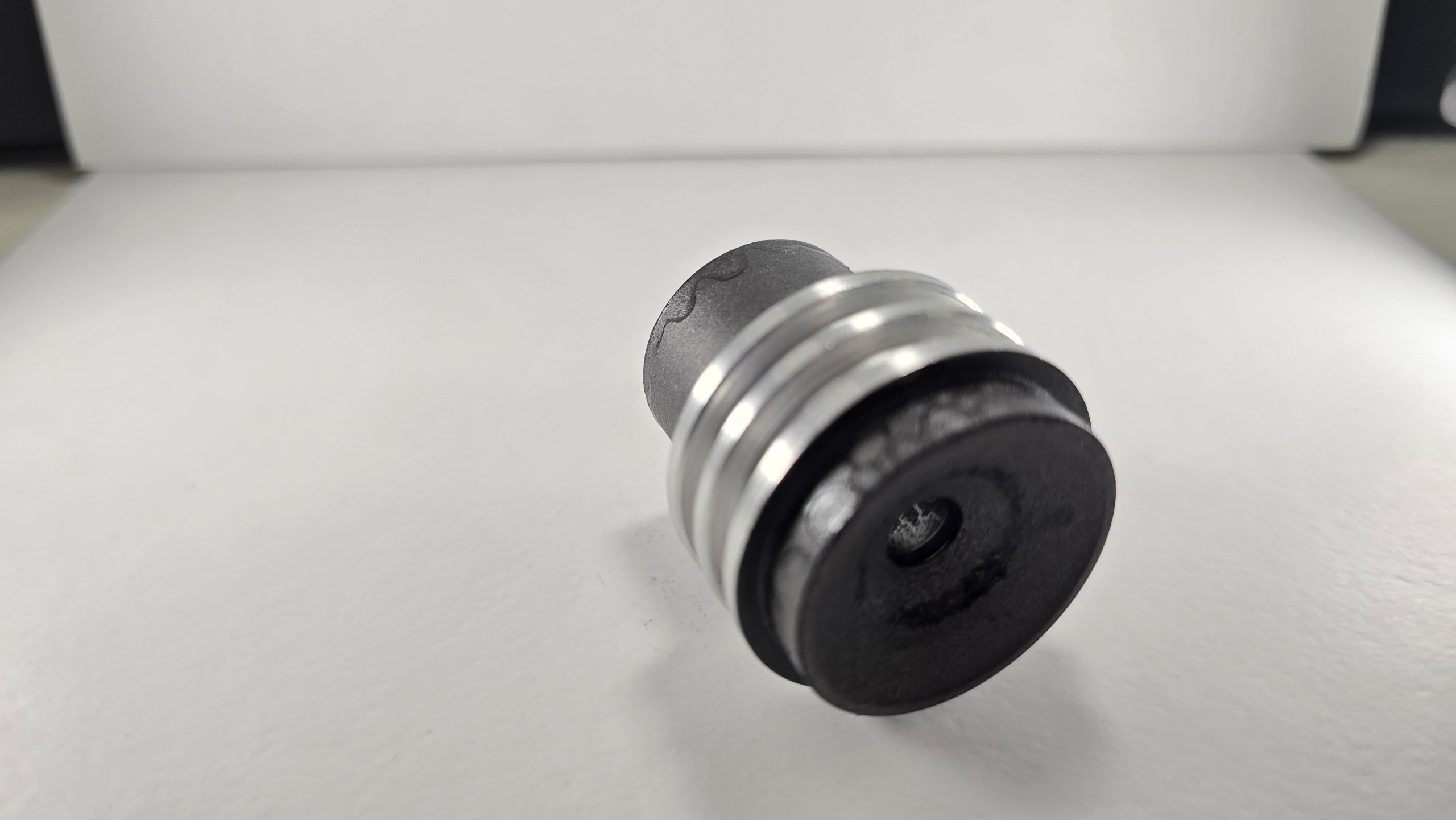
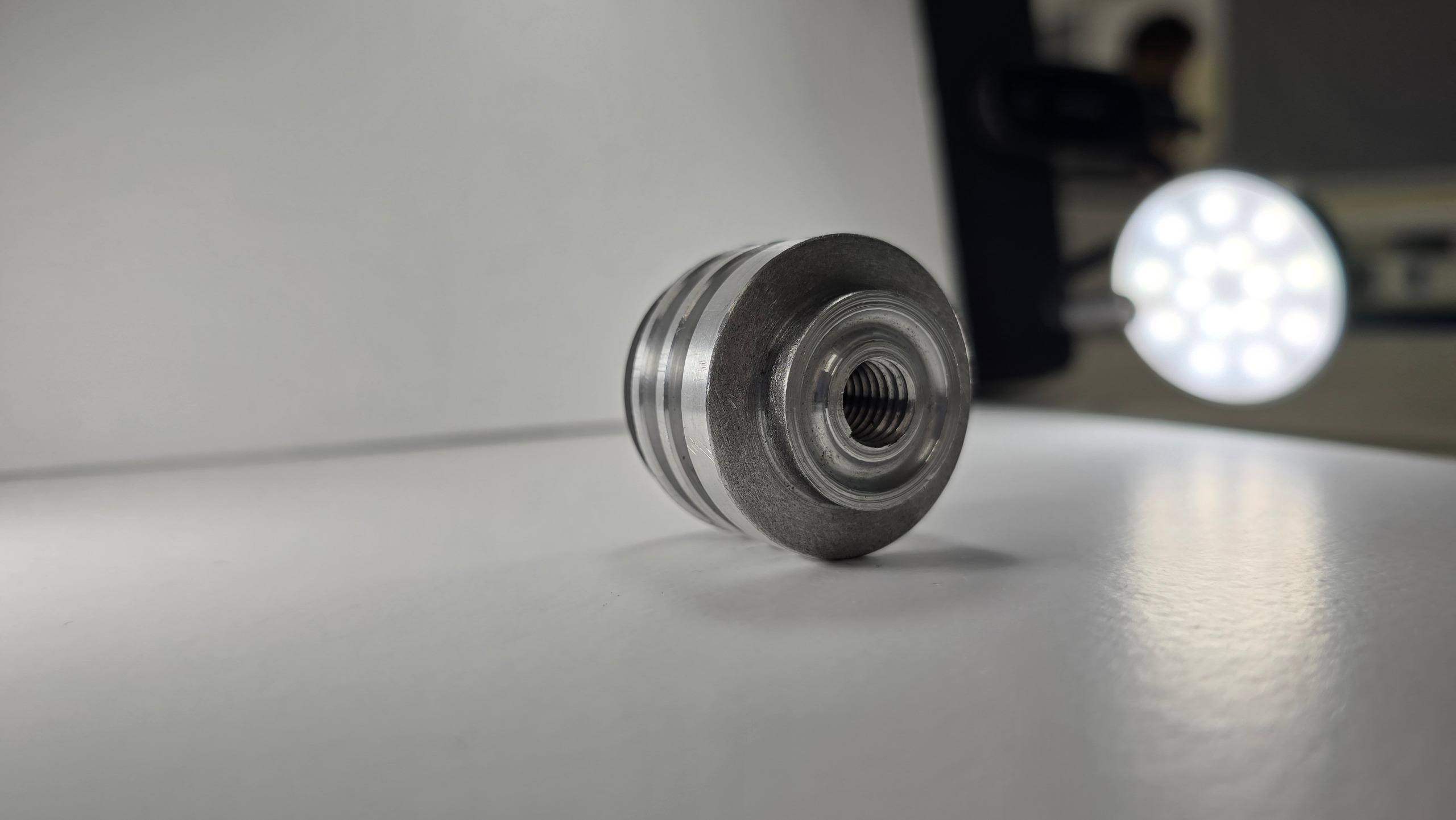
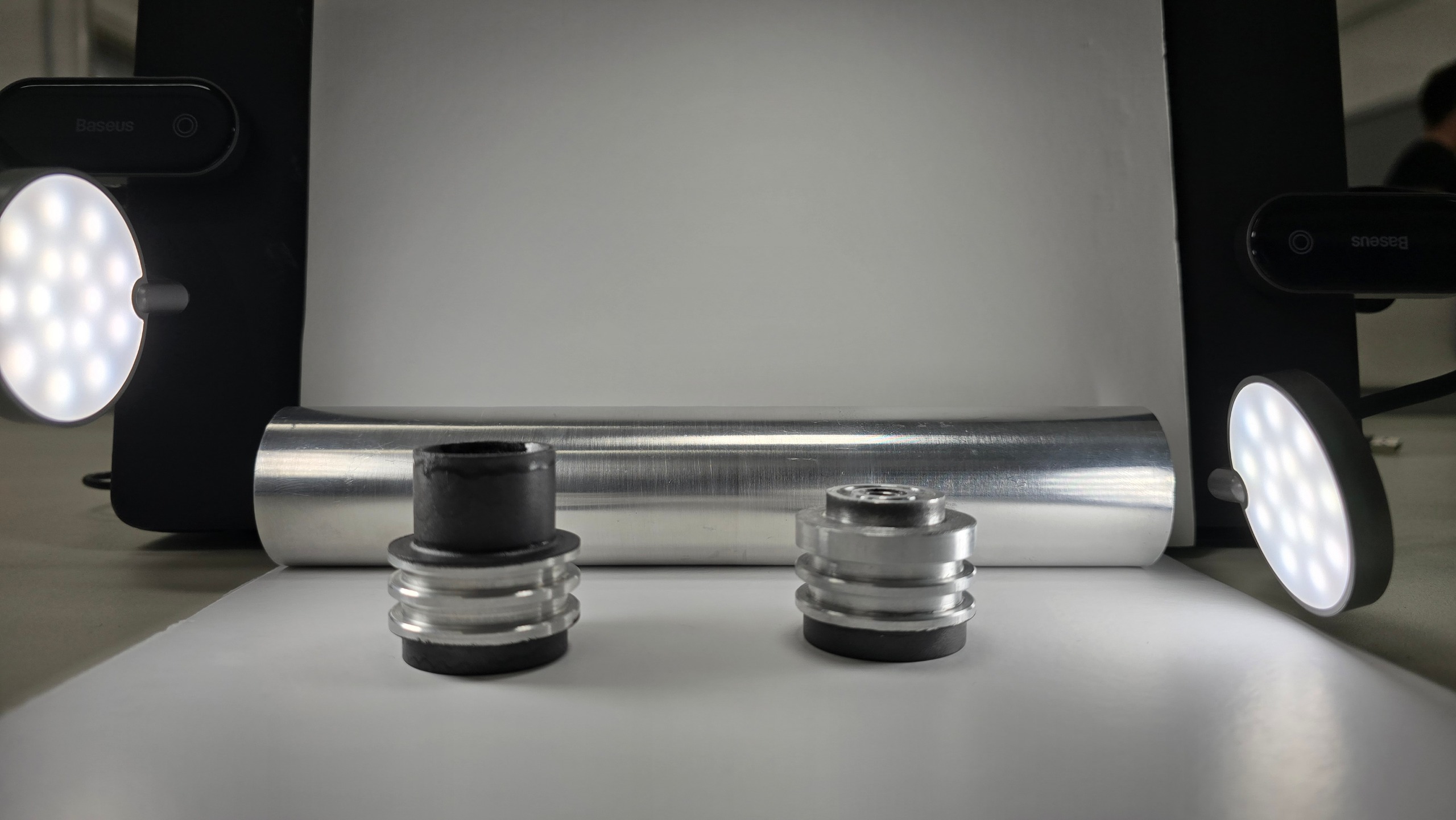
Sealing was equally conservative: an aluminium-and-steel casing with two O-rings at each end, redundant against any gas escape.
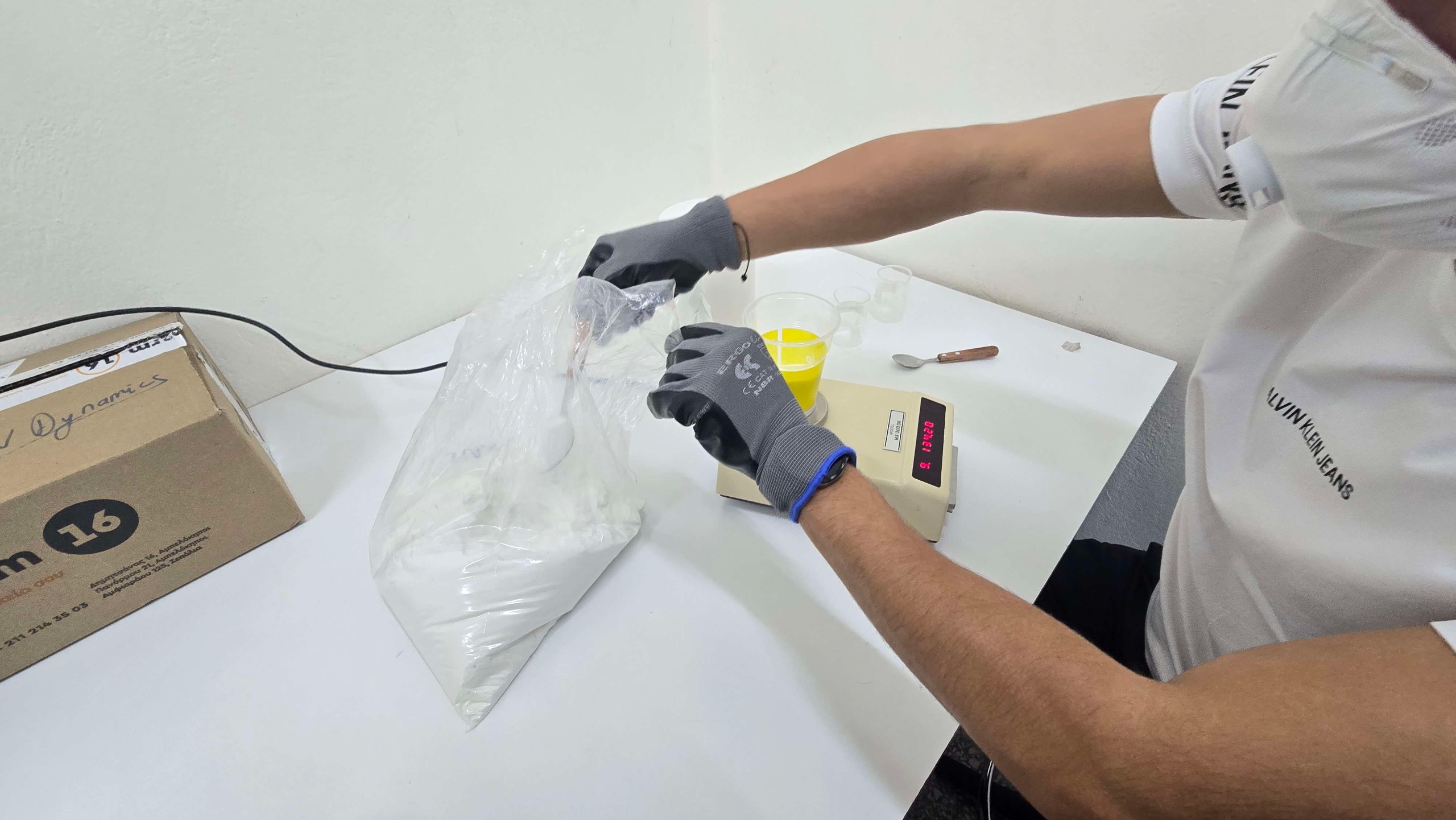
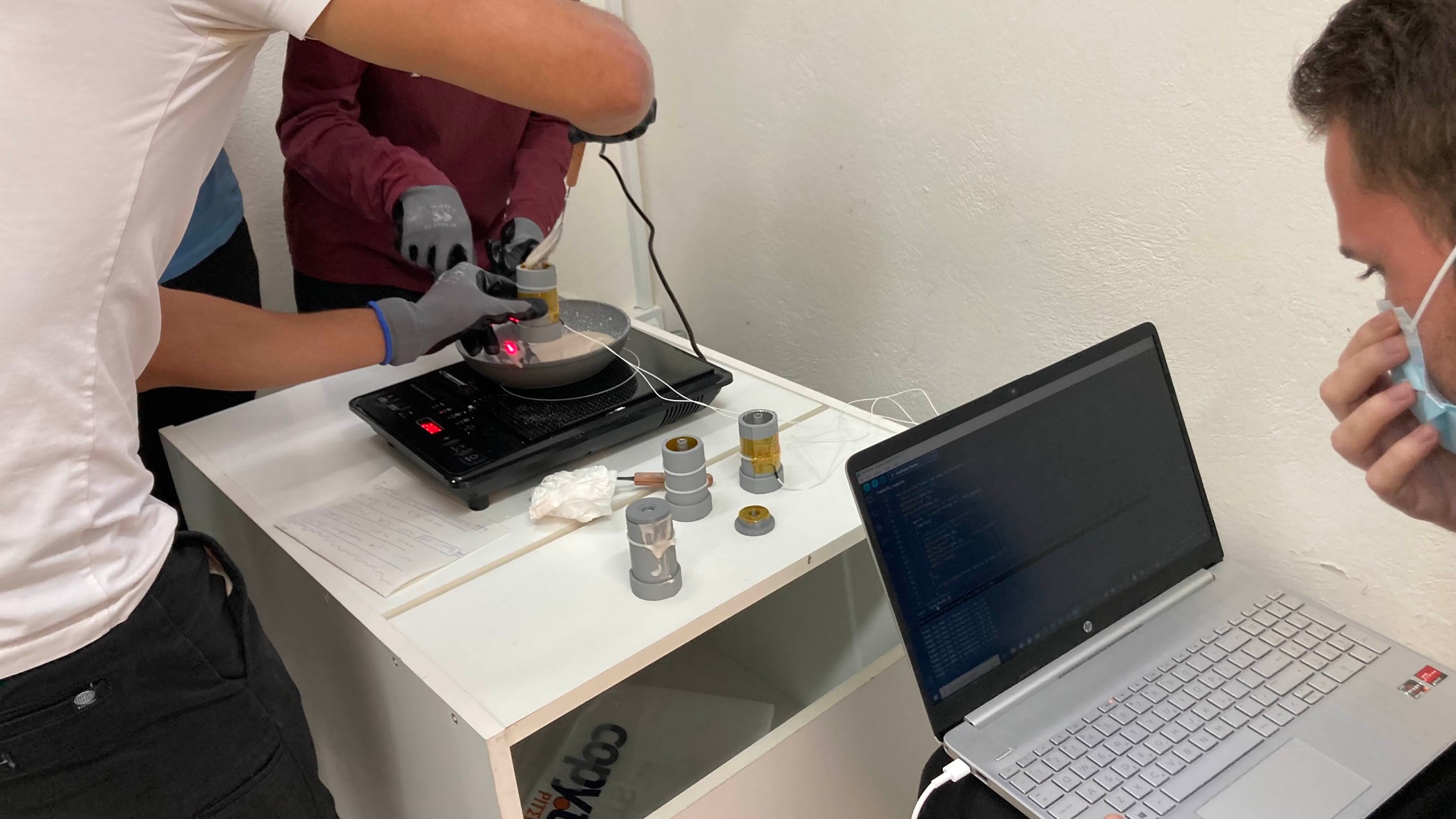
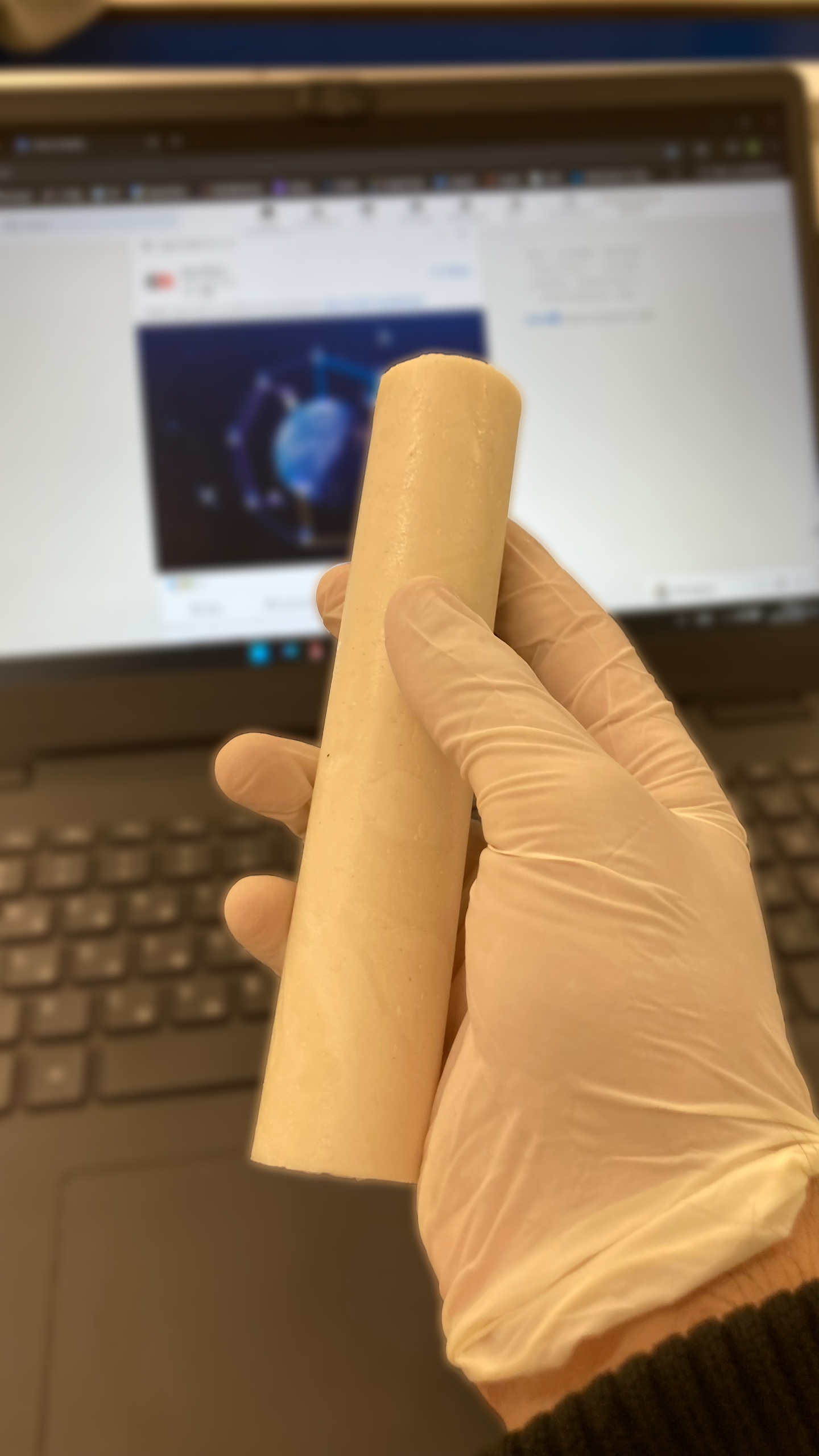
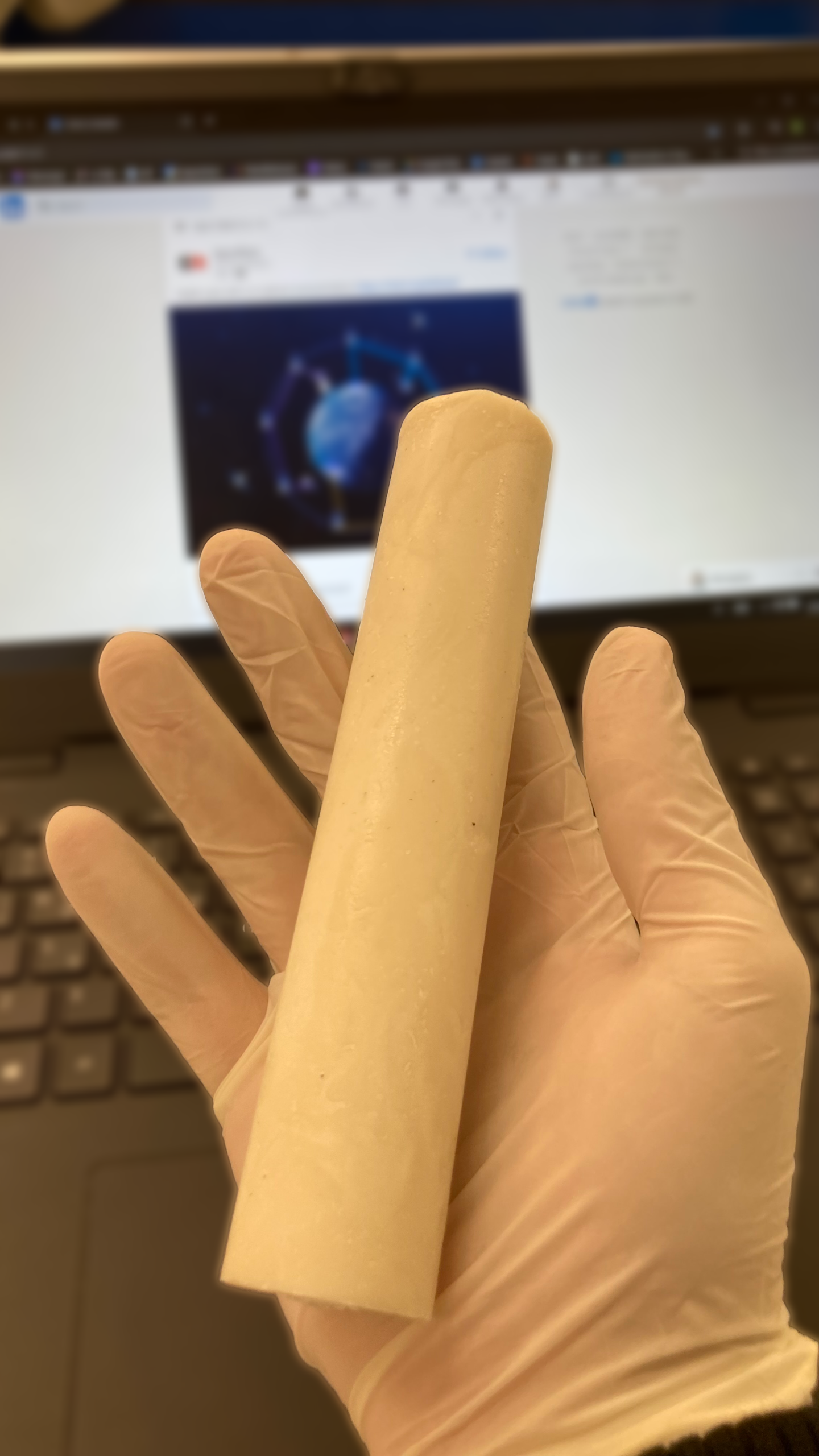
Propellant casting in 4 frames
Parachute testing
Before the static fire, the team conducted drop tests of the recovery parachute system, testing deployment reliability, descent rate, and structural integrity of the canopy and shroud lines under load.
A reliable recovery system is a prerequisite for any flight campaign: without a demonstrated ability to return the motor safely, no launch approval is possible.
Design, cook, cast, then a failed first fire
We took the motor through the full chain in-house: design, propellant mixing, curing, and casting, assembly, and instrumentation.
First static fire: partial failure. The grain burned slowly. The root cause: the ignitor was floating loose in the cylindrical grain core instead of being secured against the inner grain surface, a setup error missed during pre-fire checks.
The fix: a thinner ignitor, carefully attached to the inner grain surface for reliable core ignition. Two days later, I regathered the team, reset the test, and fired again.
A clean second fire
The second test fired cleanly: a fast, sustained expulsion of hot gas confirmed the ignitor fix and a nominal burn.
A first for NKUA, and an achievement only a handful of Greek universities have reached.
Tsiolkovsky-1: Primary Components (Close-Up)
Thrust curve
Predicted from an internal-ballistics model, simulated, not test-stand data. Progressive grain geometry drives thrust from 76 N to a peak of 335 N over a 1.38-second burn.
Grain mass depletion
209 g of KNO₃-sorbitol consumed in 1.38 s. Mass drains progressively, accelerating through the final quarter.
Model limitations
The thrust curve and mass depletion are model output, not test stand data. The static fire carried no pressure or load instrumentation, so there is no measured pressure trace and the model is not validated against either firing. Ignition quality is outside the model, which is exactly what the first attempt demonstrated.
The Future of DeltaV Dynamics
A higher performance version of Tsiolkovsky-1 is underway, aiming to produce 5 times the thrust of its predecessor.
New members are being trained and taking responsibility of high-risk parts of the project, continuing the initial goal of this team.
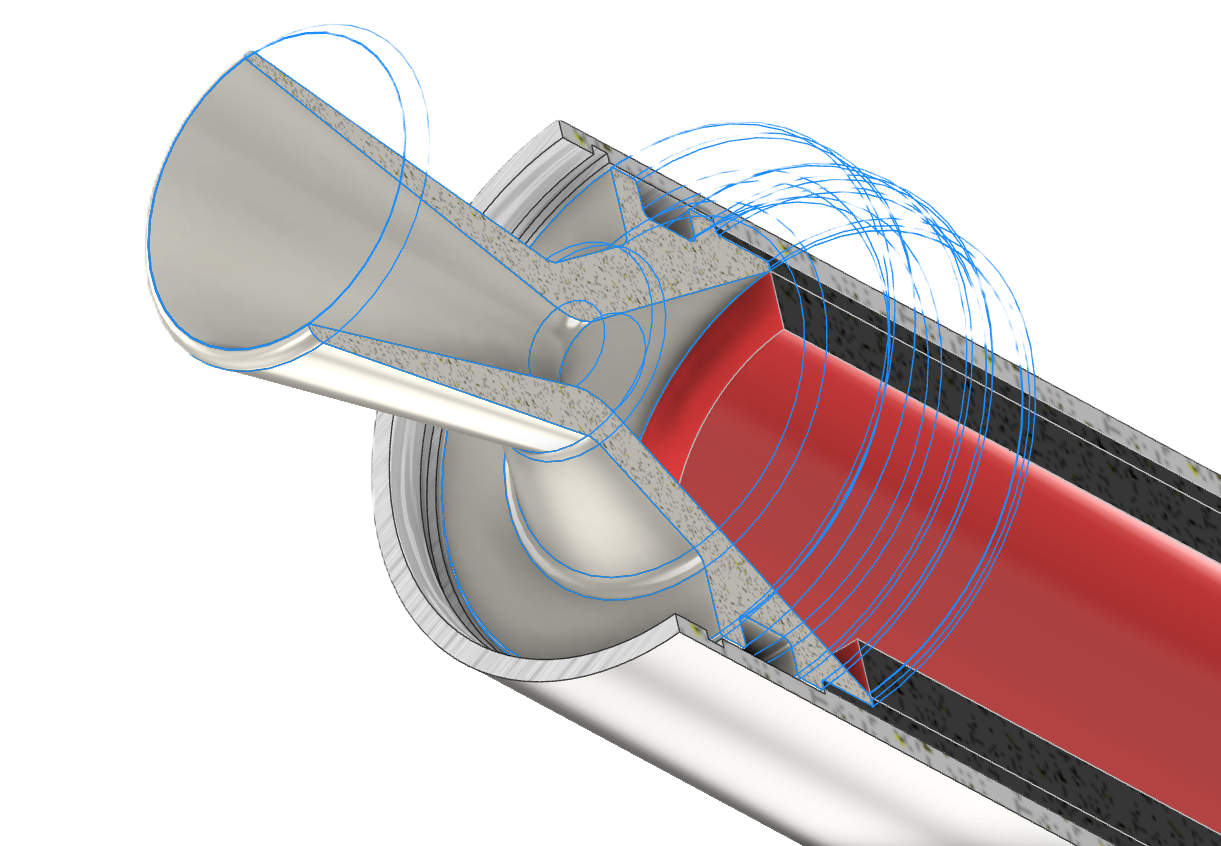
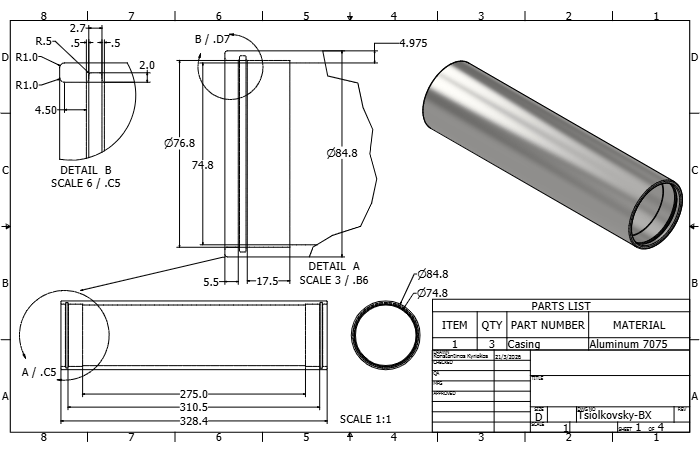
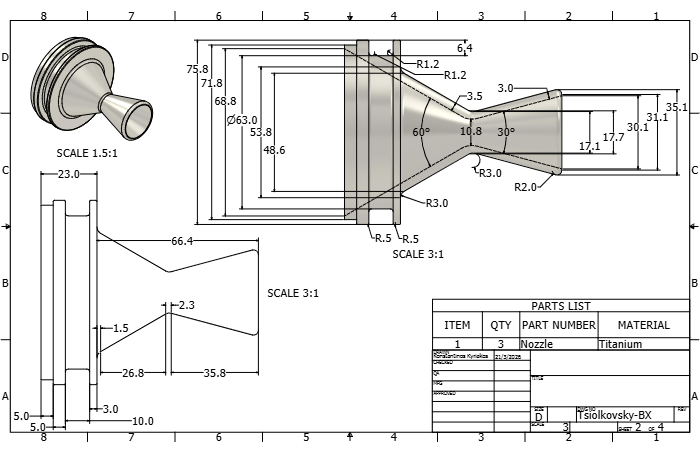
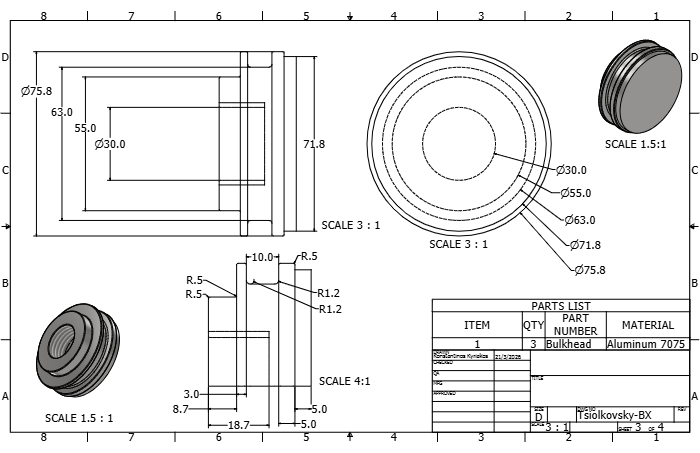
Tsiolkovsky-1B: CAD and manufacturing prints
The full set of production drawings for the next-generation motor: bulkhead, casing, and nozzle detailed to manufacturing tolerances, plus the complete assembly. Click any sheet to download the source PDF.